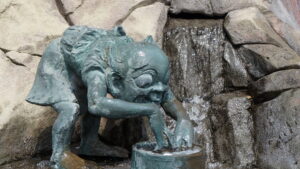
Obake
Japanese obake are quiet presences that arise at boundaries—between night and day, certainty and unease. They are not fixed beings, but moments of sensed disturbance. Rather than explaining fear, obake remind us that the world is never fully graspable, and that unseen possibilities remain.
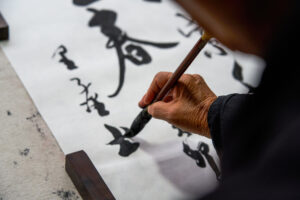
Shodo
Shodo is the art of the irreversible. Since every stroke is final and cannot be undone, it captures a person’s raw spirit on paper. It is a dialogue between powerful ink and silent white space, showing that what is left unsaid is as important as what is written.
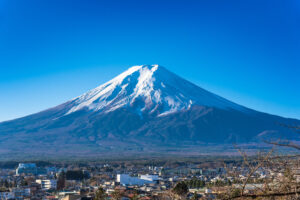
Mount Fuji
Mount Fuji is more than a mountain; it is a "Void" that swallows worldly noise. Beyond its symmetrical beauty lies a profound silence that resets the soul. It acts as a mirror, reflecting your inner self against the canvas of eternity.
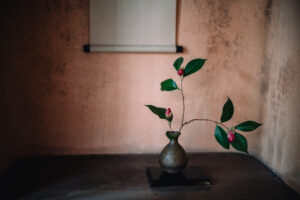
Ikebana
Ikebana is the art of "Ma"—the intentional design of space. Moving beyond mere decoration, it uses minimal lines to spark a dialogue between nature and silence. By arranging flowers as living entities, we stop "possessing" beauty and begin "relating" to the profound invisible tension that breathes life into the void.
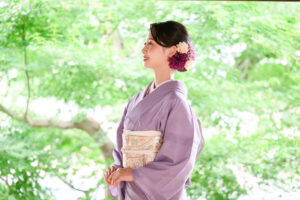
KImono
The Kimono is more than attire; it is a "mobile architecture" of stillness. Beyond its silken beauty, its straight-line design creates a sacred space (Ma) between fabric and body. By surrendering to its form, you reclaim a serene gravity, synchronizing your spirit with the silent rhythms of nature and the void within.
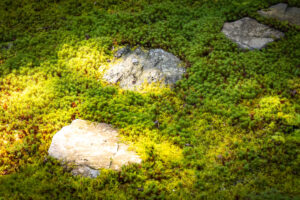
Moss
Moss in Japan is "living time." Unlike lawns that control nature, moss thrives in shadows, turning age into beauty. By slowing down to observe its tiny, moist universe, we find a quiet escape from modern speed and rediscover the richness found in ancient, weathered things.
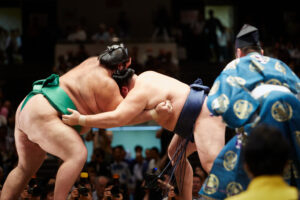
Sumo
Sumo is more than a sport; it is a sacred ritual of "stillness in motion." Through the heavy stomp of the Shiko and the silence of the Shikiri, wrestlers harmonize with the earth. This ancient art transforms a physical clash into a spiritual prayer for universal balance and peace.

Japanese Fireworks
Japanese fireworks are not only celebrations. They are brief moments where light appears, fades, and leaves space behind. Rooted in remembrance and impermanence, they invite viewers to share silence, pause, and personal memory—opening a quiet void that remains after the sky turns dark again.
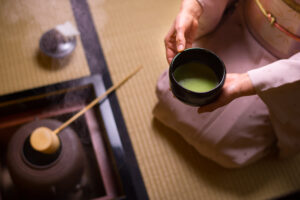
Tea Ceremony
The Japanese tea ceremony is not a lesson in manners or abstract philosophy. It is a quiet time shared through simple actions—preparing tea, receiving it, and drinking together. By slowing down in this way, attention naturally turns to the present moment, allowing silence and pause to be accepted as they are.
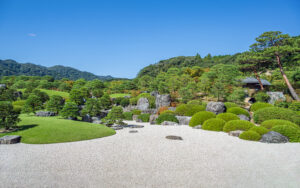
Japanese Garden
Japanese gardens are often described as spaces in harmony with nature, or as cultural forms shaped by respect for it. Yet as one walks through such a garden, scenes appear and disappear, and the sense of grasping the whole quietly fades. What remains is not understanding, but a gentle awareness of being with nature.
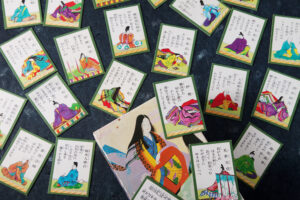
Waka
Waka is a traditional Japanese poetry form shaped by silence as much as words. Rather than explaining feelings, it creates space for meaning to arise between the poet, nature, and the reader. Each poem remains open, changing its resonance across time, place, and personal experience.
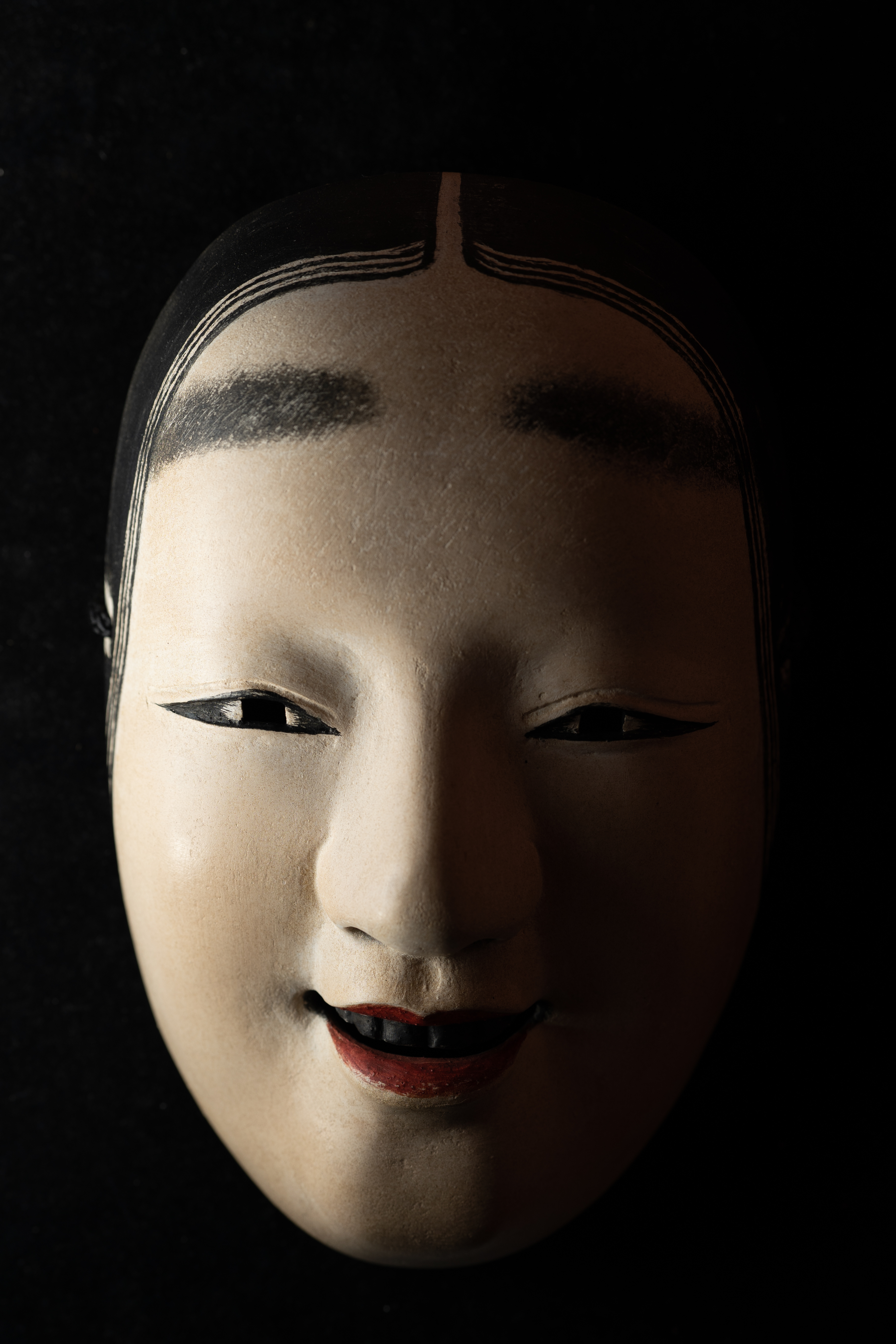
Noh
Noh seeks truth not by expression, but by restraint. Within silence, it holds the most human emotions. In many plays the dead speak, yet death itself is part of life— a quiet cycle where boundaries between self and world dissolve, and life is seen through relation.